Free Samples
Next-day delivery

Laminate flooring is made from compressed wood fibres with a photographic top layer, while vinyl flooring is made from PVC with a realistic printed design.
Jump to:
| Feature | Laminate Flooring | Vinyl Flooring |
| Composition | High density fibreboard (HDF) core with a decorative image layer and protective coating. | Made from PVC layers including backing, printed design, clear wear layer and protective coating. However, SPC LVTs are slightly different with a wear layer, waterproof topcoat, rigid Stone Plastic Composite core and the attached underlay. |
| Appearance | Excellent wood-effect designs, but limited when it comes to realistic stone-effect looks. | Wide range of stone and wood designs with realistic textures. |
| Cost | £10-£25 per m². | £10-£30 per m², click LVT is higher. |
| Durability & Lifespan | 15-25 years is the average lifespan, but we guarantee up to 25 years with proper care. | 15-25 years with good maintenance, but we guarantee up to 25 years. |
| Water Resistance | Some laminates can be water-resistant. But not all of them are. | It depends on the kind of LVT. For example, our SPC LVTs are waterproof, but our glue-down LVTs aren’t water-resistant. |
| Installation | Thanks to its click-fit and floating floor system, laminate is a DIY-friendly floor to install. | Click options are DIY-friendly, glue-down is best left to professionals. |
| Maintenance | A simple sweep or vacuum and the occasional damp mopping will do the trick, just make sure to avoid standing water. | All LVT needs is a quick sweep or vacuum and the occasional mop. |
| Eco-Friendly Credentials | Is more eco-friendly when the HDF is FSC-certified. | SPC LVTs are eco-friendly to varying degrees due to the natural materials used and their longevity. But LVTs made with PVC are considered less eco-friendly. |
Laminate flooring is usually the cheaper option, starting around £10-£25 per m², with underlay costing around £5 per m². You can install laminate by yourself, but if you want a professional to fit it, this can add another £10-£15 per m² to the overall cost. Our range of laminates start at the low price of £10.99m², but keep an eye out for our sales - you might find them even cheaper!.
Vinyl flooring is more of an investment, costing between £10-£30 per m², while professional installation can range from £15-£25 per m² depending on the method. Our LVT flooring tends to start around £23.99m², rising to £49.99m² but you can often catch them on sale too.
LVT flooring is mostly made of PVC, while laminate flooring is made of HDF (high density fibreboard). But, SPC LVT flooring is made from different materials as its core is a combination of limestones and stabilisers. This forms its stone-plastic composition.
Luxury Vinyl Tiles and Laminate flooring both typically have four layers:

In terms of being eco-friendly, vinyl flooring is made from PVC, which is, of course, a type of plastic. However, SPC LVT flooring can be more sustainable due to its recyclable materials, non-toxic composition and its longevity.
Laminate flooring is more eco-friendly as long as the HDF is sourced from well-managed forests, such as the type we use here for our wood flooring products.
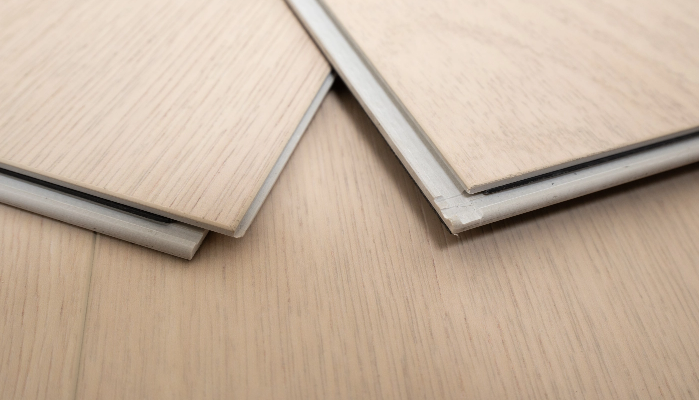
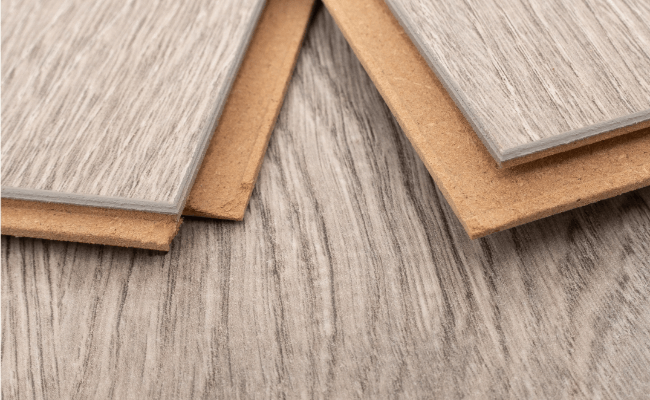
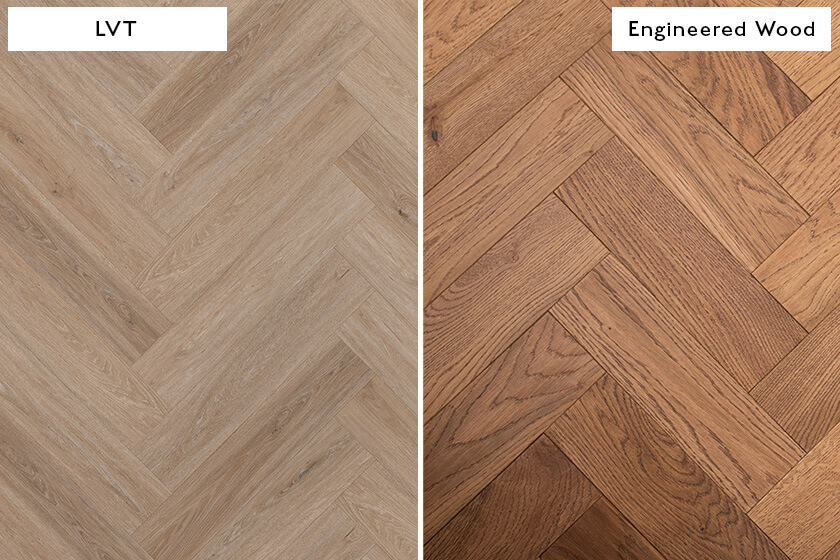
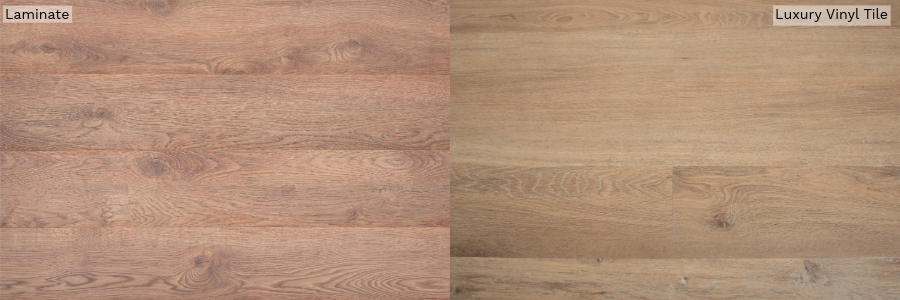
Both laminate and vinyl flooring offer convincing wood and stone looks, but vinyl often has the edge when it comes to realism.
Laminate flooring comes in a wide range of finishes to suit different styles. Its single plank designs mimic the look of individual wooden boards that creates a natural and spacious feel. While stone-effect laminate gives you the look of natural stone tiles without the cold feeling underfoot. You can also choose parquet laminate flooring for the natural elegance of real parquet without the cost or maintenance.
LVT flooring also offers excellent variety, including natural-looking wood, stone and parquet patterns. Its textures and finishes are incredibly realistic - usually more so than laminate and often with embossing that matches the printed grain. Vinyl is one of the most lifelike alternatives to natural materials, which is why it’s so popular.
Both LVT and laminate flooring are easy to install.
Most laminates use a ‘click system’, meaning the individual planks slot into each other and click into place. It can either be installed as a floating floor or glued down.
Vinyl tiles can also use a locking system, or can be loose-laid or glued down.
The simple installation method offered by both flooring types means that even the most amateur of DIYers can do it!
Both LVT and laminate flooring can be used with underfloor heating.
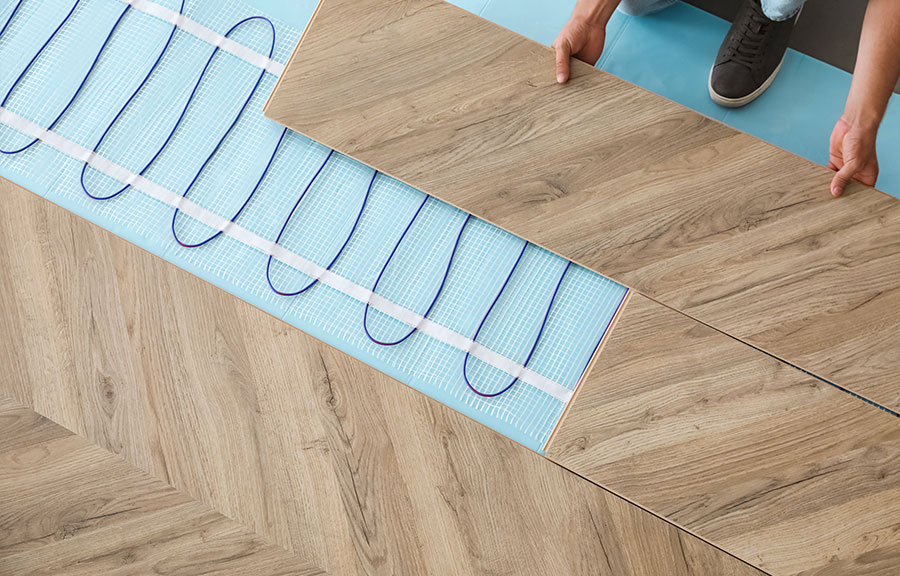
Both floors average around a 15-25 year lifespan. But, if you take care of your floor, our vinyl and laminate flooring is guaranteed to last 25 years, even in the busiest homes.
Vinyl flooring is the clear winner for kitchens and bathrooms. Most LVTs are water-resistant, but you can find plenty of fully waterproof options that can handle steam, spills and splashes with no problems.
Laminate, on the other hand, isn’t waterproof and can swell if exposed to moisture for too long, so we don’t recommend it for bathrooms. But laminate can handle the odd splash or spill, making it a good contender for kitchens. Just make sure to wipe up any spills quickly!
One of the main advantages of both laminate and vinyl flooring is how low-maintenance they are and how easy it is to keep the floors clean.
When it comes to cleaning laminate, a simple sweep and the occasional damp mopping will do, but make sure to avoid standing water as it can damage the floor.
Vinyl isn’t much different, making it a practical choice for family homes or kitchens! A regular sweep or vacuum will do the job, same with the occasional damp mopping. Just be careful to not leave any standing water on glue-down LVTs.
Still debating laminate vs LVT flooring? Get in touch with our friendly flooring experts, they’ll be happy to answer your questions and can help you order your unlimited free samples.
Don’t forget to follow us on Instagram and TikTok, where you can keep up to date with all the latest news, blog posts and helpful tips. Tag us on Instagram at #MyLuxuryFloor and mention us on TikTok @luxuryflooringfurnishing.