

How to Lay Glue-Down LVT Flooring
Jump straight to:
> Tools You'll Need
> Your Installation Options
> Getting Ready to Lay Your Floor
> Installing Your Floor
> Finishing the Look
> Forgotten Something?
> Your Flooring is Finished!
or Download the guide as a PDF
Tools for Fitting Your Straight Plank Glue-Down LVT Floor

To install this floor yourself, you’ll need some tools to help with the job.
Have these to hand:
- Tape measure
- Spirit level
- Pencil
- Workbench or sawhorse
- Underlay and underlay tape (if installing with self-adhesive underlay)
- Flooring tiles
- Heavy floor roller - we recommend it weighs at least 50kg
- Spacers
- Stanley knife
- Handsaw or chop saw
- Chisel (for fitting around architrave)
- Drill (for covering pipework)
- Moisture meter – the correct type for your subfloor
- Combination square
- Beading or skirting boards (to finish the look)
- Dryback adhesive and notched trowel (if using the glueing installation method)
- Safety equipment i.e. knee pads, safety goggles, dust masks, ear defenders
- Cutting templates for awkward shapes (optional)
Some of these tools are available through our website.
Your Options for Installing Glue-Down LVT
Note: This guide is based on single plank glue-down vinyl flooring. If you’re fitting parquet, please take a look at our parquet-specific installation guide.
Installation with Dryback Adhesive
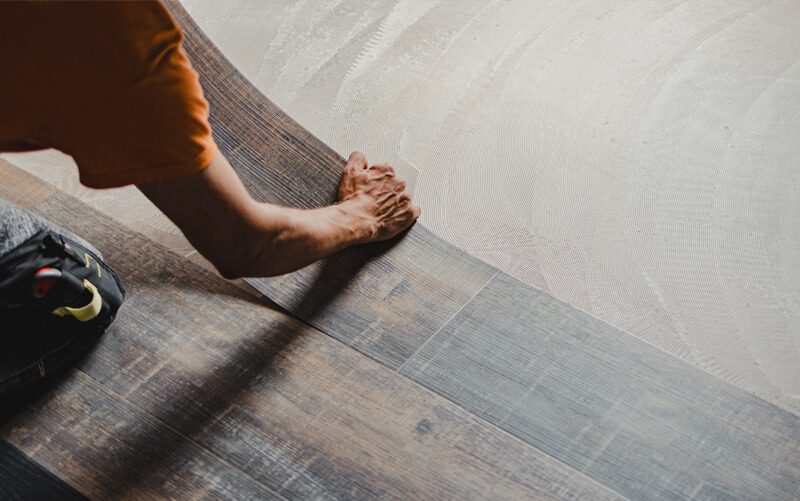
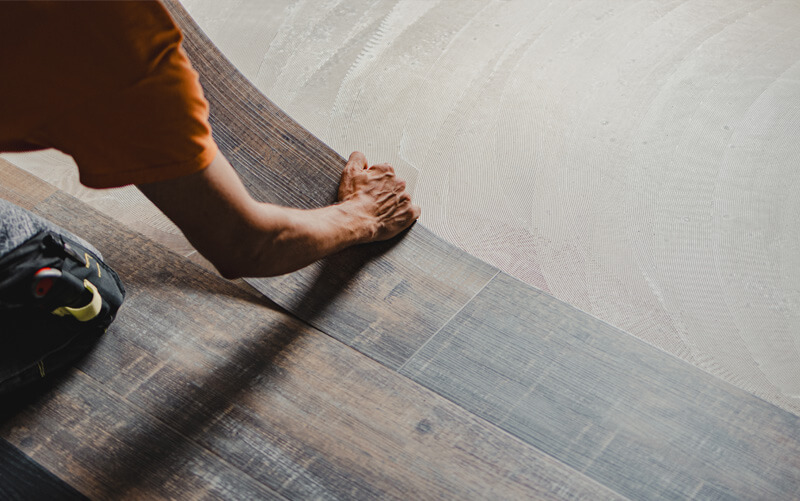
This installation method involves applying adhesive to the subfloor and then laying your flooring on top.
Installation with Self-Adhesive Underlay
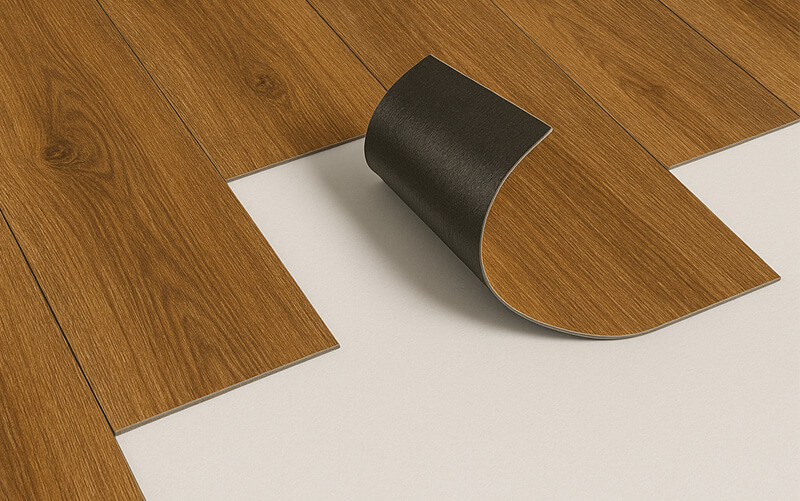
This installation method involves laying self-adhesive underlay over your subfloor and securing your subfloor to the adhesive surface.
Getting Ready to Lay Your Floor
1. Check everything looks good
When your flooring arrives, start by opening one box to check you’re happy with the floor.
Some of our wood-effect vinyl flooring is designed to look just like real wood, which means there may be some colour variation between the planks and batches. When you get to laying the floor, you can make the most of these colour contrasts by mixing and matching planks with different shades to get a lovely natural look.

2. Acclimatise the boards
It’s important to leave your flooring in the room it’s going to be fitted in for at least 48 hours. It’s fine for it to stay in its packs during this process. You can either stack the packs or lay them on the floor, but they must remain horizontal and the weight of the packs must be distributed evenly. Keep the temperature of the room around 20-21 degrees throughout the acclimatisation period. If you’re using underfloor heating, gradually increase the temperature so the planks acclimatise to the heat. Please read our underfloor heating tips below for more information.

Note: This glue down LVT flooring can be fitted over warm water underfloor heating systems only. The surface temperature must not rise above 27°C. If you can’t guarantee the temperature your floor will be exposed to, we recommend using a two-component adhesive for extra stability.
Important Info
- Don’t turn off your heating system after installation, or allow it to switch off automatically, as small gaps or cracks may appear when the floor cools and contracts. A dispersion adhesive usually takes around 72 hours to set fully, depending on your room temperature and humidity. During this period, it’s essential to keep the floor warm and avoid sudden drops in temperature.
- If your system also provides cooling, it must include condensate protection. This means that the water running through the pipes stays within 3°C of the room’s air temperature, preventing damage from moisture or temperature changes.
- Electric underfloor heating is not compatible with this glue down flooring.
- Floor heating systems installed before 1990 should not be used, as they typically reach higher temperatures that can damage the flooring.
3. Prepare the subfloor
Before laying your new floor, make sure to remove any existing flooring and prepare the subfloor so it’s clean, dry (for concrete, this means a maximum 2% moisture content), and level.
For the best results, we recommend using either a concrete or wooden subfloor. The subfloor should have a surface regularity that meets the SR1 standard (3mm in 2m reference BS8203).
If your subfloor consists of joists, you’ll need to lay a sheet of plywood on top to create a stable, even base before fitting your floor.
Choosing the right plywood:
| JOIST SPACING | PLYWOOD THICKNESS |
| 40.6cm | 19mm |
| 48.7cm | minimum of 19mm |
| 60.9cm | 22-28mm* |
Once the plywood is in place, double-check that the subfloor is level.
Use a moisture meter to ensure the subfloor is dry enough before installation. If you’re working with concrete, it must be completely dry. A damp-proof membrane should be laid over the subfloor to prevent moisture from affecting the boards—this helps avoid expansion or buckling. (Many modern underlays now include built-in damp-proof membranes.) Make sure any screws or nails are fixed below the surface so they won’t puncture the underlay (if you’re using the self-adhesive underlay method). Remove old adhesive and thoroughly vacuum the area to clear dust and debris.
4. Plan the layout
Consider the direction you want your planks to run. As a general guideline, laying the boards parallel to the longest wall usually creates the best result. It’s also worth thinking about the shape of the room— in a square space, aligning the boards with the flow of natural light can produce a beautiful finish.
An Important Note
Your flooring should be one of the final steps in any renovation. Work from the top of the room down, so by the time you’re ready to install the floor, there’s less risk of causing damage. Be sure to install any fixed units, such as kitchen cabinets or islands, before fitting your flooring.
How to Install Glue-Down LVT Flooring
Dryback Adhesive Method

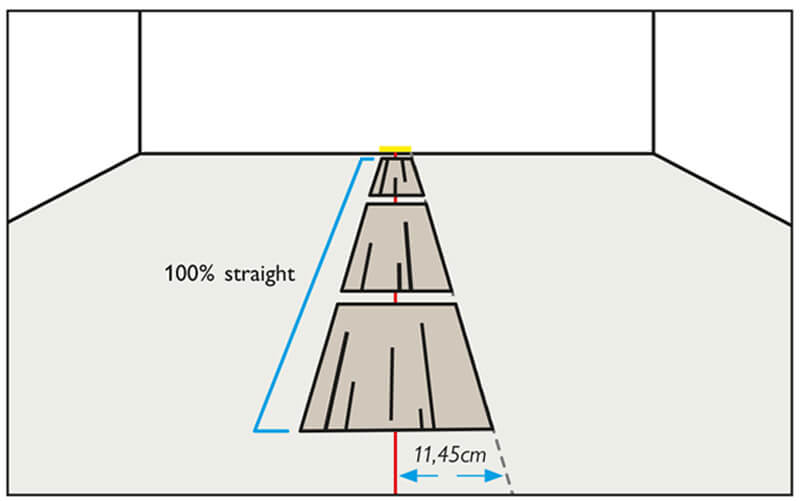
1. Start at the centre of the room (see image), following your planned layout line. Spread adhesive evenly with your notched trowel. Don’t cover more area than you can work with in the adhesive’s open time (this will be stated on the packaging or in the manufacturer’s instructions). Always follow the instructions for coverage, open time and working time.
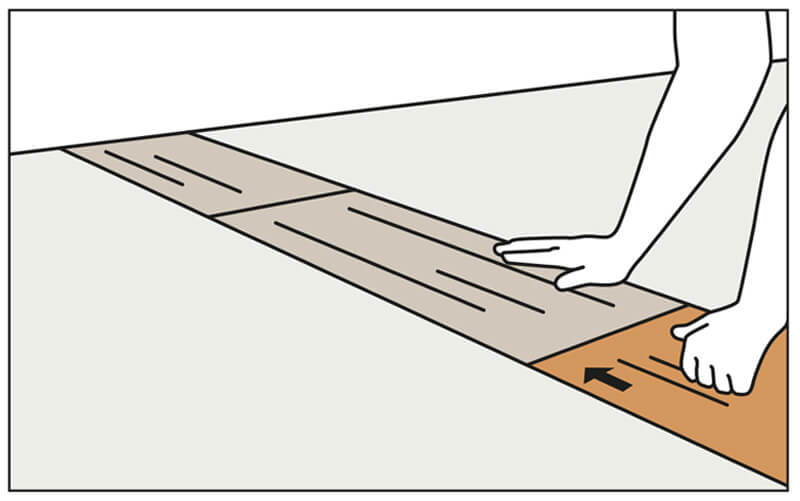
2. Place planks side by side without tension (don’t force them). Roll the boards immediately after laying them, pressing them into full contact. Leave a 2.5mm expansion gap around all edges (walls, fixed features, pillars, etc.) to allow the floor to expand and contract.
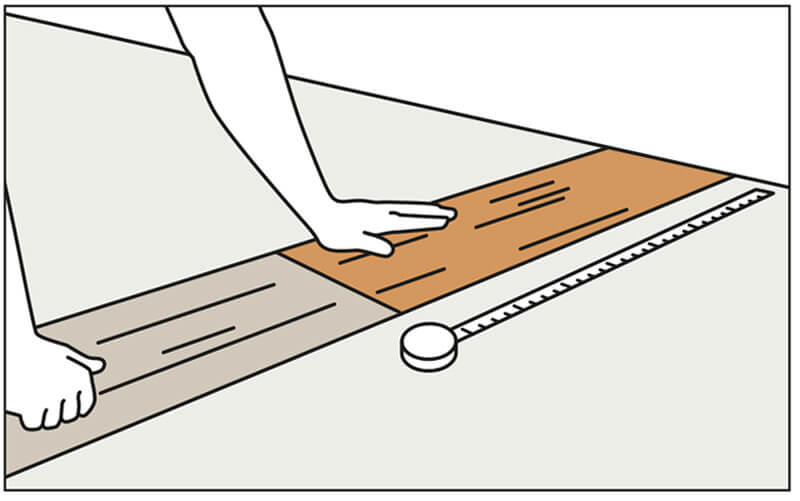
3. Measure the final board of the first row so it fits neatly up to the wall or skirting without force.
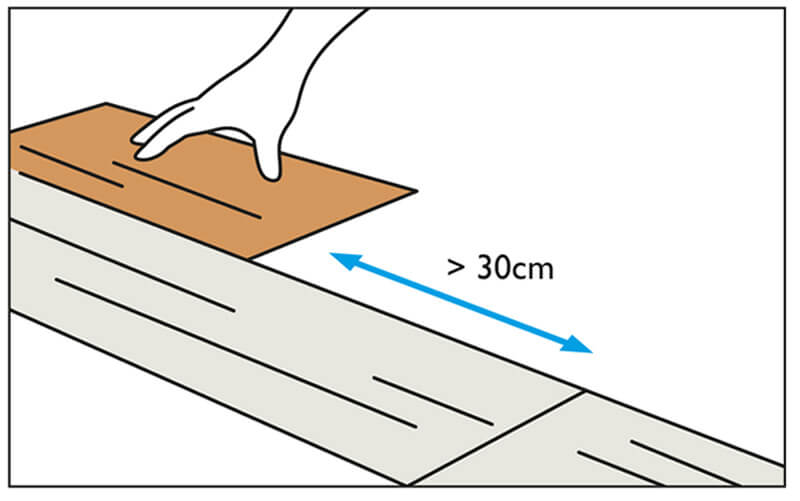
4. To avoid a ‘stair-step’ effect, don’t start the next row with that remaining piece — you’ll see repeating joints. Staggering your planks will create a more natural look. If you’re installing glue-down tiles, these can be laid in a straight, half-offset or staggered pattern. Stagger plank joint seams by at least 30cm and tile joints by at least 20cm.
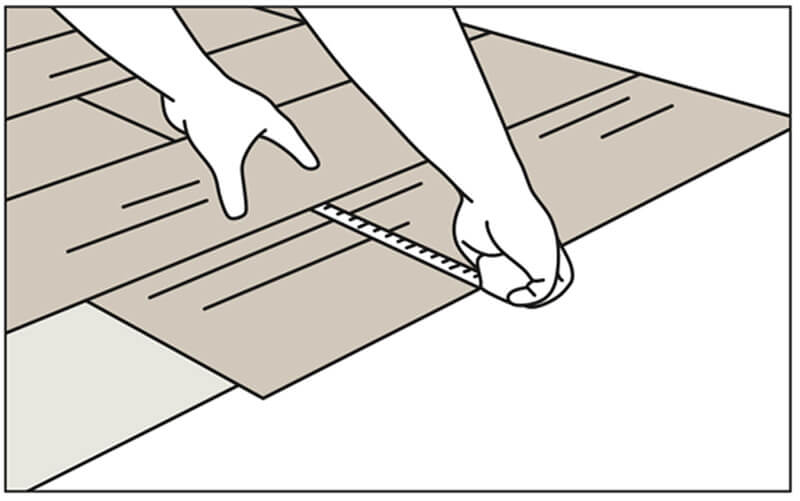
5. Lay each new row, connecting it gently to the previous row, again without tension. Maintain your staggered seam pattern (30cm for planks, 20cm for tiles). Keep checking alignment and flatness as you go to avoid bumps or irregularities.
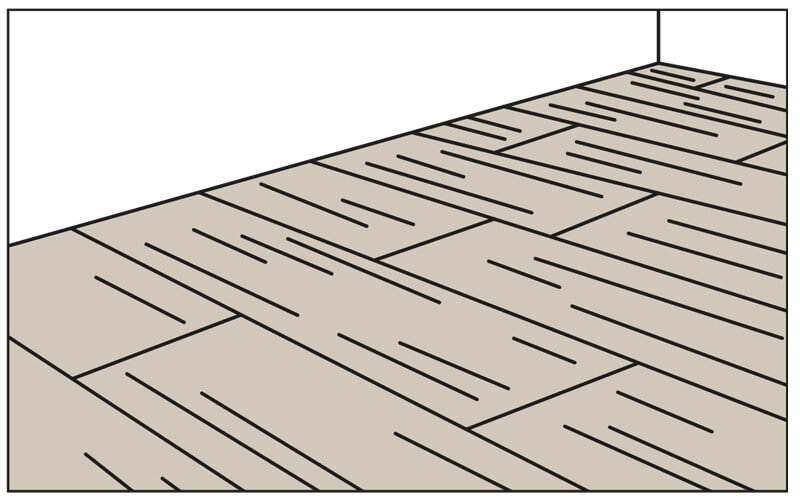
6. Carefully measure the gap against the wall or around obstacles. Use a template for tricky shapes if needed. Trim the boards so they fit snugly without pushing adjacent planks out of place. Wipe away any adhesive immediately with a damp cloth before it dries.
We know it’s tempting to start using your new floor straight away, but it’s important to allow the adhesive to dry for 24 hours before placing furniture or cleaning your floor! To remove dried adhesive, soften it with hot water and gently lift off using a soft brush or cloth. Never use solvent or harsh chemicals — they may damage the vinyl surface.
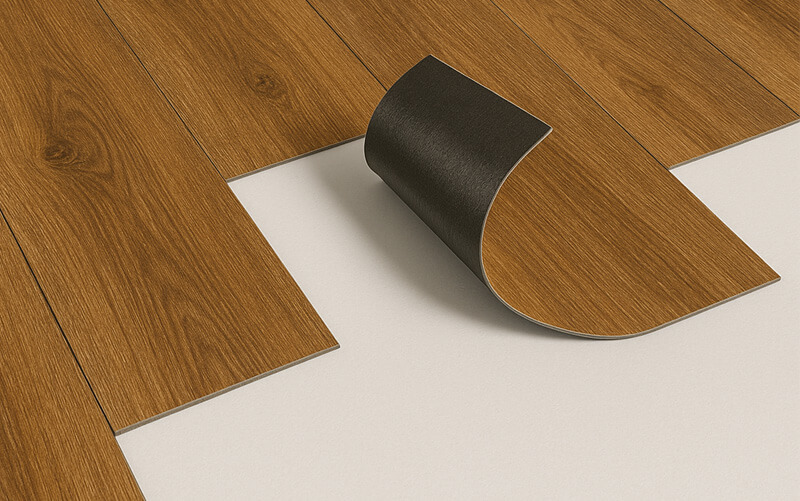
Self-Adhesive Underlay Method
Note: Leave a 2.5mm gap around the entire perimeter of the room. If your room is bigger than 100m² or extends more than 10m in length, you’ll need to increase these gaps to 5mm.
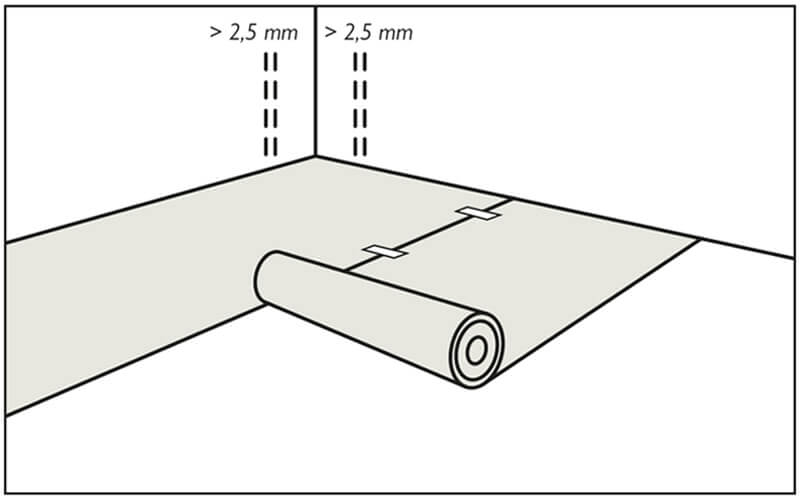
1. Roll out the self-adhesive underlay across your subfloor, keeping the protective film facing upwards. Cut the underlay to size using a utility knife.
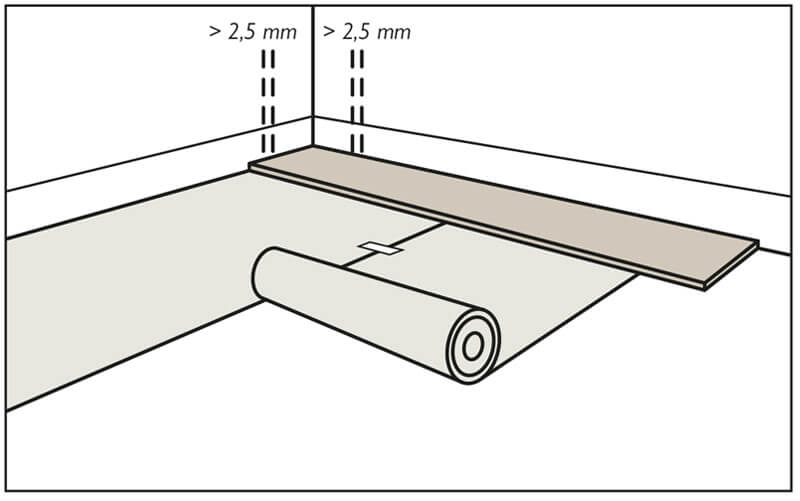
2. Lay the underlay perpendicular to the direction your floor will run. Leave a 2.5mm gap between the underlay and the walls to allow for expansion. When placing the next piece of underlay, make sure the boards are perpendicular to the underlay underneath. If needed, use tape to secure the underlay joins and stop them from shifting during installation.
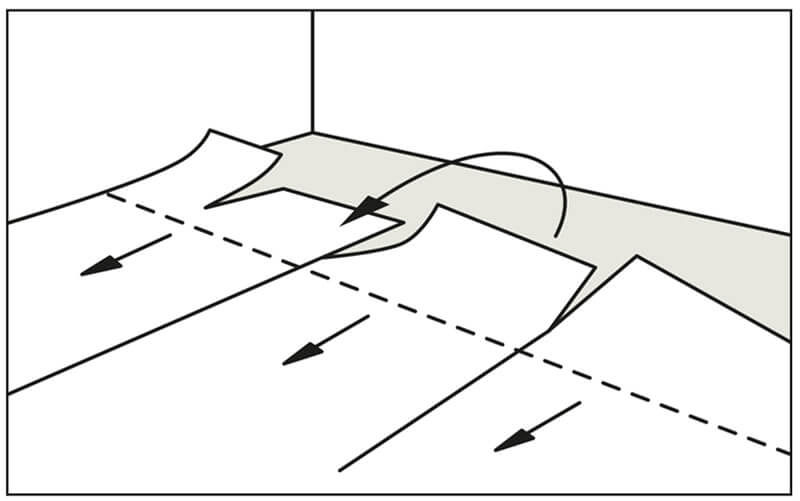
3. Carefully peel back the protective film on the underlay to reveal the adhesive layer underneath. Only peel away enough film to fit your first few floor planks. Keep the rest covered to stop dust or dirt from sticking to it. Do not walk or kneel on the exposed adhesive layer, as this can reduce its sticking power.
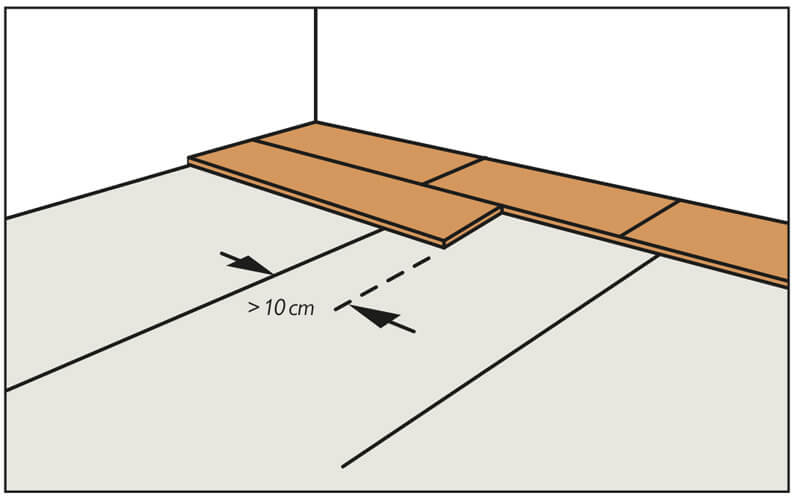
4. Lay your first row of Dryback floor panels as straight and tight as possible, pushing each piece neatly together. Check your alignment — even a small mistake at the start can affect the overall look of your floor. If a plank isn’t quite right, you’ve got about 10 minutes to reposition it, but try not to do this more than twice, as it can weaken the bond. Overlap each roll of underlay by at least 10 cm to create a secure base. Keep laying the rest of your boards, cutting pieces to fit as needed with a sharp utility knife.
Once your new floor is fitted, wait at least 30 minutes before walking over it.
Do not place furniture, rugs or heavy objects on the new floor for at least 24 hours while the adhesive cures and do not clean the floor during this period.
Finishing the Look
To fit your luxury vinyl tiles around any pipes, first mark the position of the pipe in the board you’re using. Drill a hole in this position and make two angled cuts with a saw. These cuts should form a wedge from the edge of the board to the hole, which can then be removed. Fit the board around the hole and then reattach this wedge with glue behind the pipe so the plank appears intact.
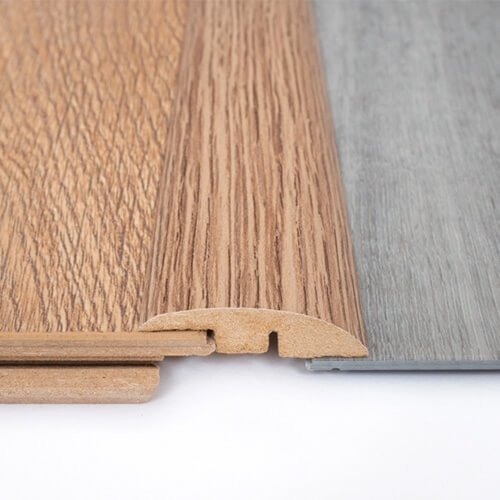
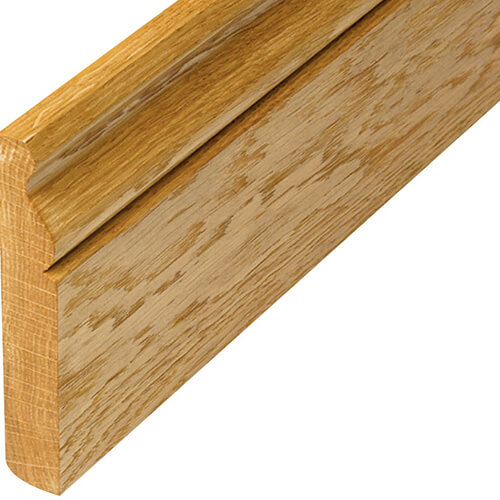
For fitting around door frames, start by removing the door from the frame. Line up an offcut of flooring along with a threshold bar stacked on top to make sure it will fit underneath the architrave. If needed, use a handsaw and chisel to trim the bottom of the architrave to the correct height. You may also need to trim the bottom of the door before refitting. You can then use matching beading and thresholds to cover expansion gaps and blend the new floors in with your existing walls, making it look professional and seamless. Make sure not to attach any trims to the flooring itself or it may affect the expansion gaps.
Any spare planks or cuttings can be kept in case any repairs need to be made.
If the expansion gap has been left too large and the skirting or moulding doesn’t cover it, you can use spare floorboards to cut strips using a hand saw and glue these strips into place.
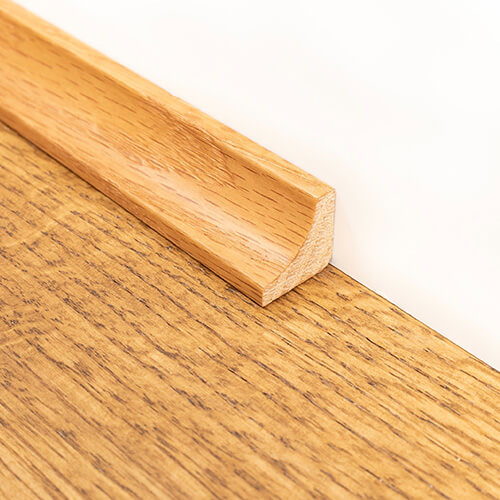
Forgotten something? It's not too late to order these...
Your Flooring is Finished!
After putting in the finishing touches (like our range of beautiful radiator pipe covers, skirting boards, stair nosing, and door profiles), you can introduce your furniture, stand back and take it all in. You just fitted your very own Luxury Floor!
We’d love to see your floor in action! So, make sure you take plenty of pictures and post them online @luxuryflooring on Instagram. Tag us #MyLuxuryFloor
We hope you’re happy with your new Luxury Vinyl Tile Flooring, but if you have any questions or issues, don’t hesitate to check out our advice centre or get in touch with our customer support team on 0333 577 0025.